
- Address
- Rm B306, Build A, RunFengYuan Business Center, Block 74, Baoan District , Shenzhen , China
- Phone
- 86-13534206421 / 86-0755-27788210
- nicolas.liu@samtronik.com
SMT stencils should be cleaned after every print cycle in high-volume production (under-stencil cleaning), with a deep clean every 5,000-10,000 prints or whenever aperture clogging is detected, using automated stencil cleaners for consistency.
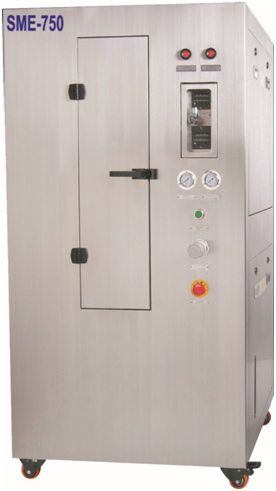
Stencil cleaning is critical for maintaining consistent solder paste deposition. During printing, solder paste can accumulate on the underside of the stencil, clog apertures, and create smeared or insufficient deposits on subsequent boards. There are two levels of cleaning: (1) Under-stencil cleaning — happens automatically between each print cycle using a cleaning paper or dry/vacuum system integrated into the printer. (2) Offline deep cleaning — performed periodically by removing the stencil and using a dedicated stencil cleaning machine. The frequency of deep cleaning depends on paste type, aperture size, and production volume. Fine-pitch (0.3mm and below) and micro-BGA apertures require more frequent cleaning. Automated stencil cleaners typically use either solvent spray with brush agitation or ultrasonic technology. Samtronik's stencil cleaning machines feature both spray and ultrasonic modes, handling stencils up to 736x736mm with cleaning cycles as short as 3-5 minutes.


A high-volume SMT line running 1,000 boards per shift may use 700-900 sheets of under-stencil cleaning paper daily. Deep cleaning every 5,000 prints has been shown to reduce print defects by 40-60%. Samtronik's automated stencil cleaners achieve IPC-A-610 Class 3 cleanliness levels with residual flux removal exceeding 99%, extending stencil life by up to 3x compared to manual cleaning methods.